
IB Diploma International Baccalaureate
An international two-year curriculum recognised by the world's leading universities. Academic rigour, critical thinking and global perspective.
Much more than a diploma,
a way of learning.
The IB Diploma Programme offers an academic education that fosters autonomy, research and the ability to connect knowledge across different disciplines. At San Cayetano it is taught in a bilingual format, in Spanish and English, and shapes pupils who are curious, reflective and ready to successfully face the challenges of university and an increasingly international world.
What is the International Baccalaureate?
The International Baccalaureate is a prestigious educational programme with a strong international dimension that prepares students to successfully enter any university in the world. Today nearly 5,000 schools offer the IB in more than 140 countries.
Schools offering this programme share a common curriculum and philosophy, aiming to develop the intellectual, personal, emotional and social skills students need to live, learn and work in an increasingly globalised world.
Students acquire broad and deep knowledge while developing critical thinking, teamwork and complex problem-solving. They also achieve a high level of maturity in taking responsibility for their results, managing their time and showing initiative. IB programmes are demanding for students and teachers alike, who have access to high-quality professional development activities, innovative educational frameworks and a pedagogy recognised by the world's most prestigious universities.
What makes the Diploma Programme unique?

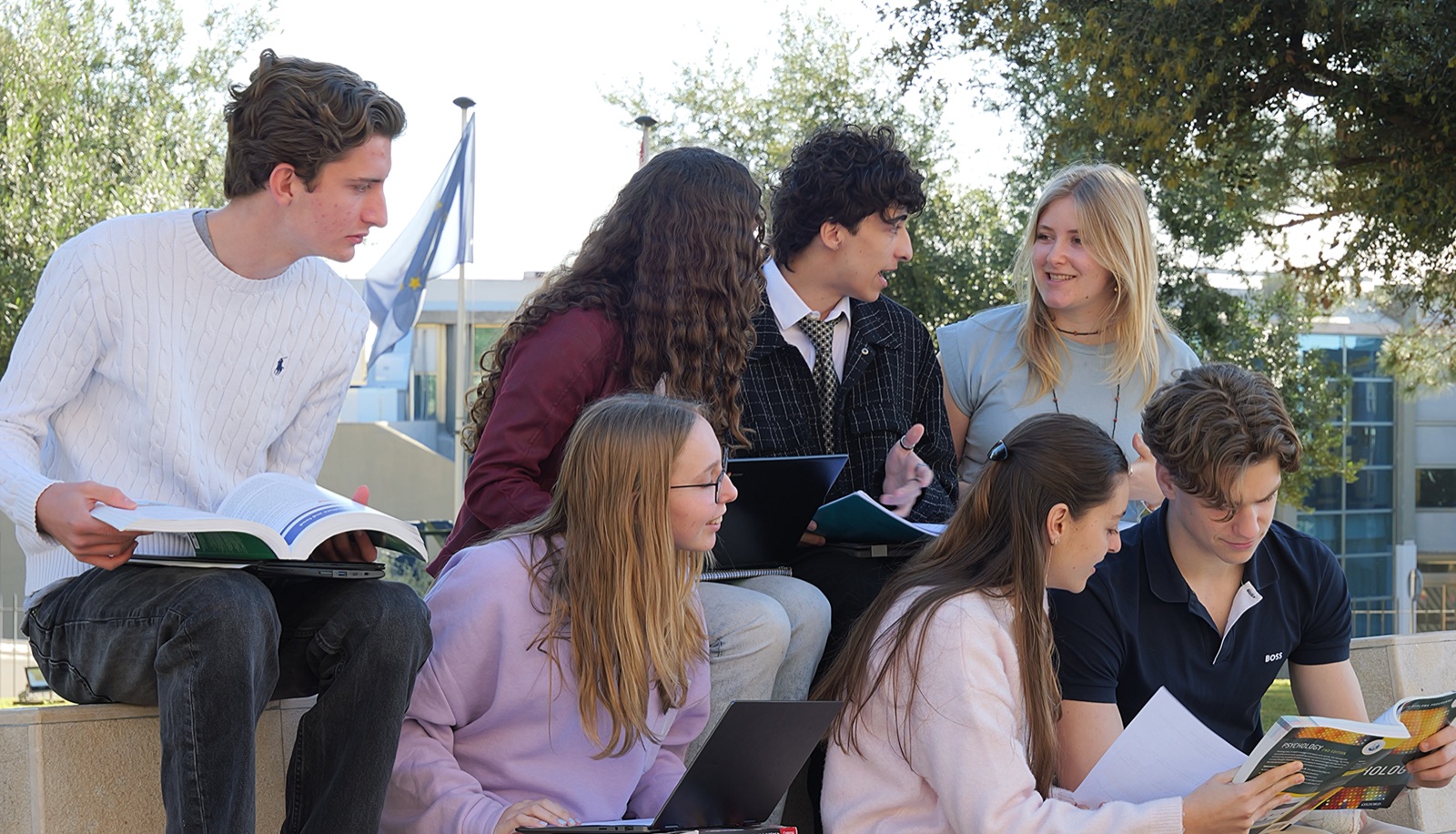
Multilingual education
At San Cayetano, the Diploma Programme is taught in a bilingual format, in Spanish and English. Pupils can also take German as an optional subject, strengthening their multilingual profile.
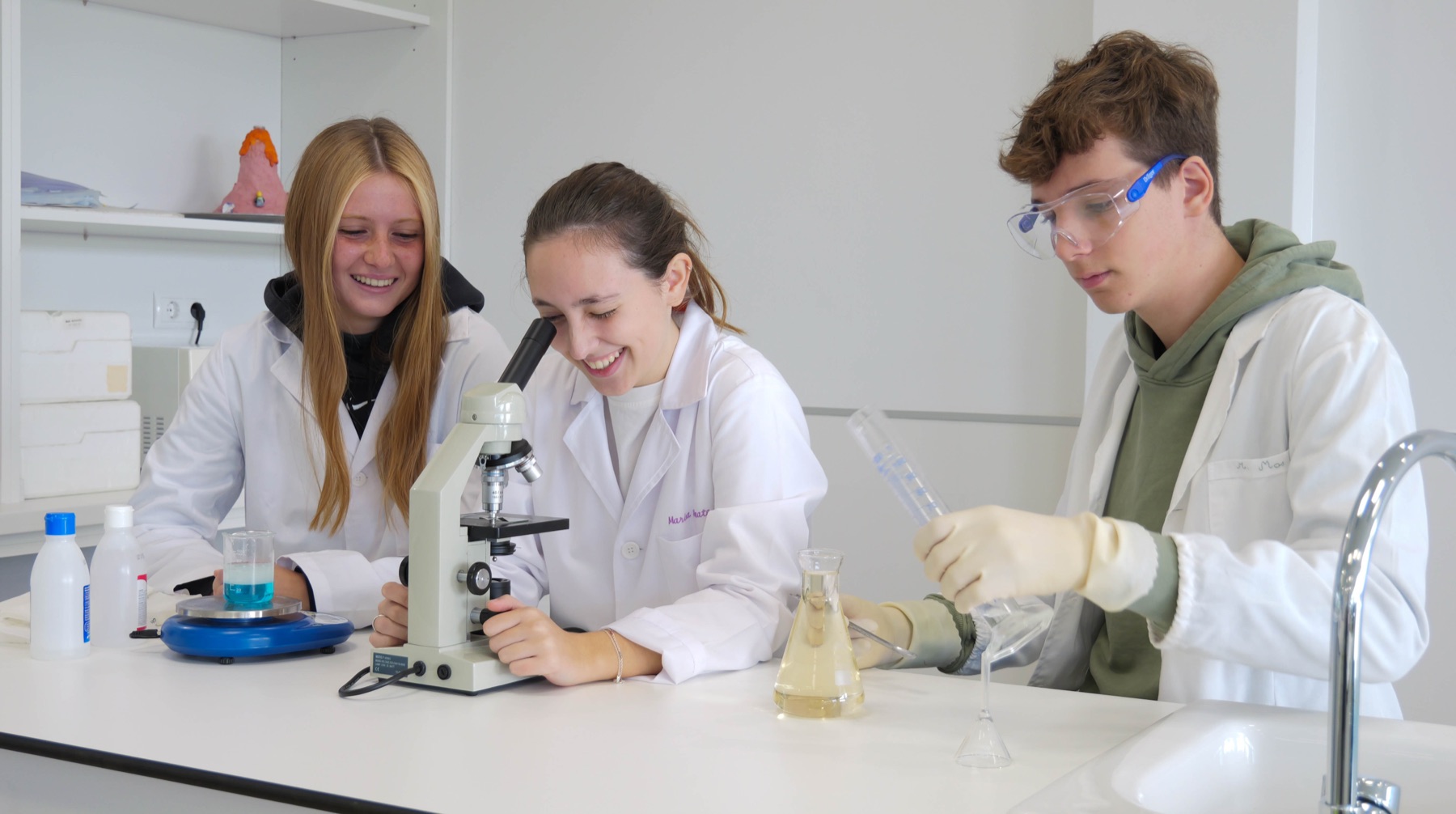
Research-based learning
Pupils learn to research, analyse and build well-founded answers. The Diploma Programme also includes subjects such as Global Politics, Environmental Systems and Societies or Visual Arts, which foster learning connected to the real world.
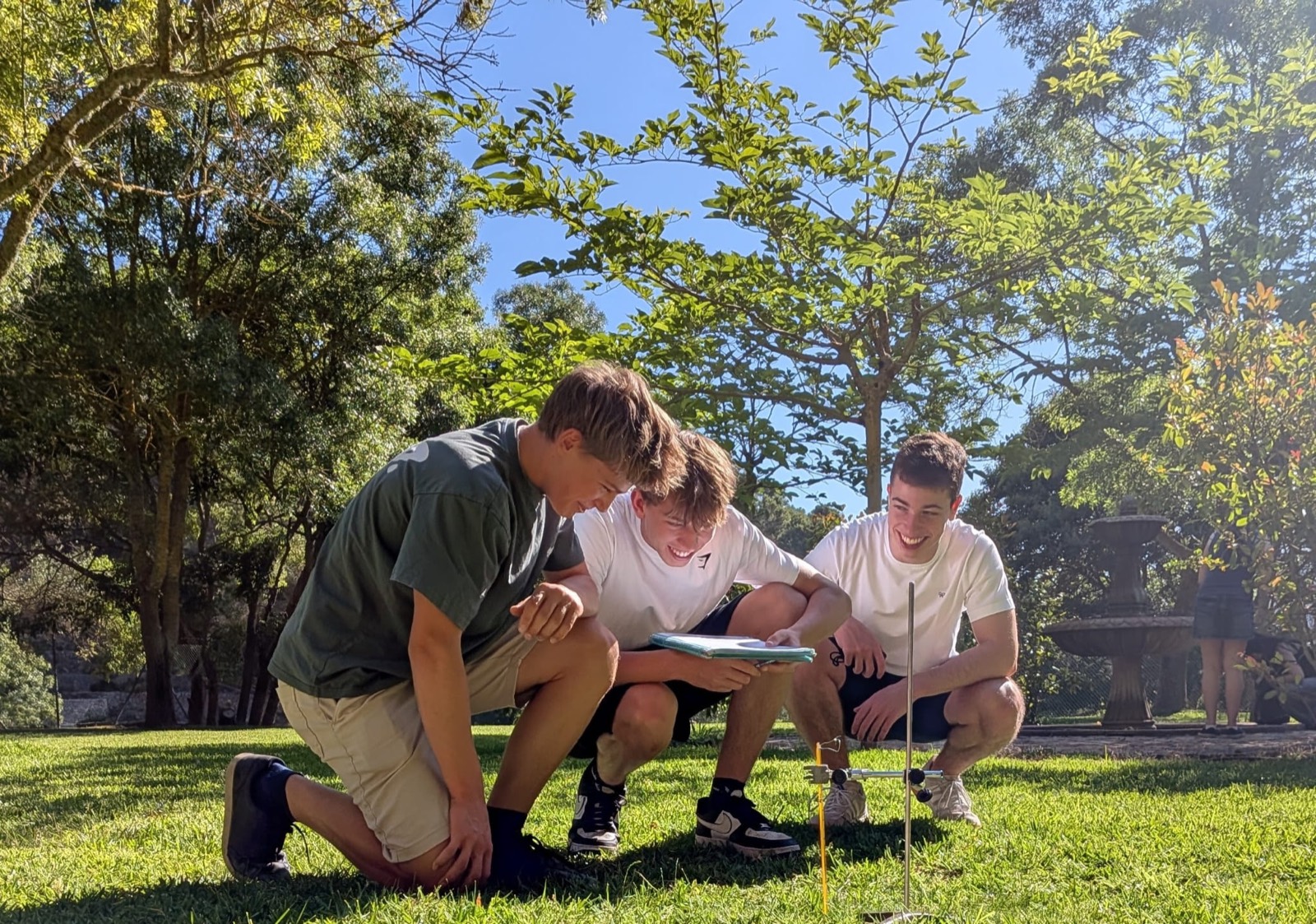
Interdisciplinary vision
The Diploma Programme connects knowledge from different disciplines to help pupils understand reality from different perspectives and establish links between what they learn.
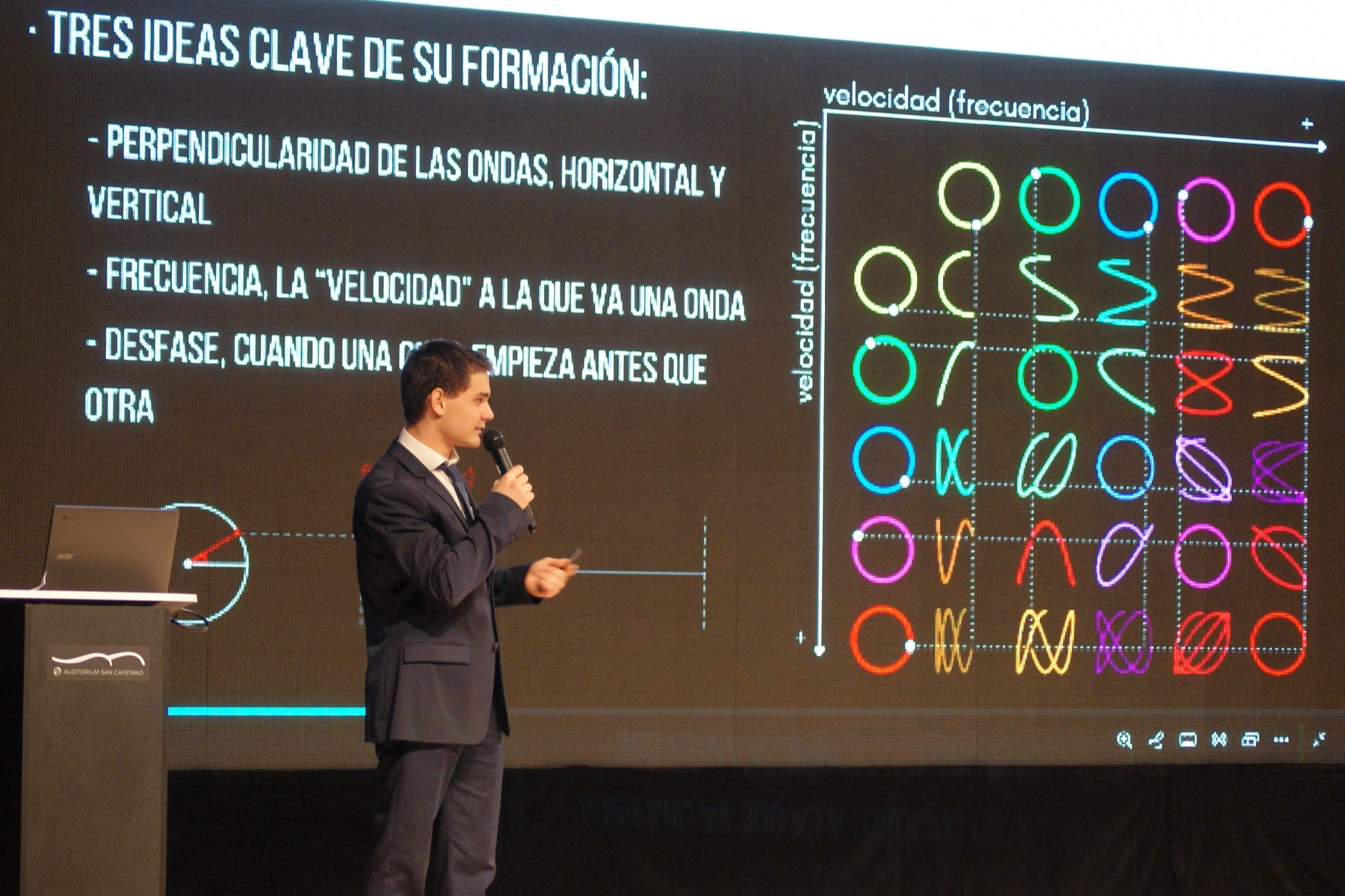
Autonomy and personal development
The Programme fosters organisation, responsibility and reflection, shaping pupils capable of managing their own learning and confidently facing the challenges of university.
Core components of the programme
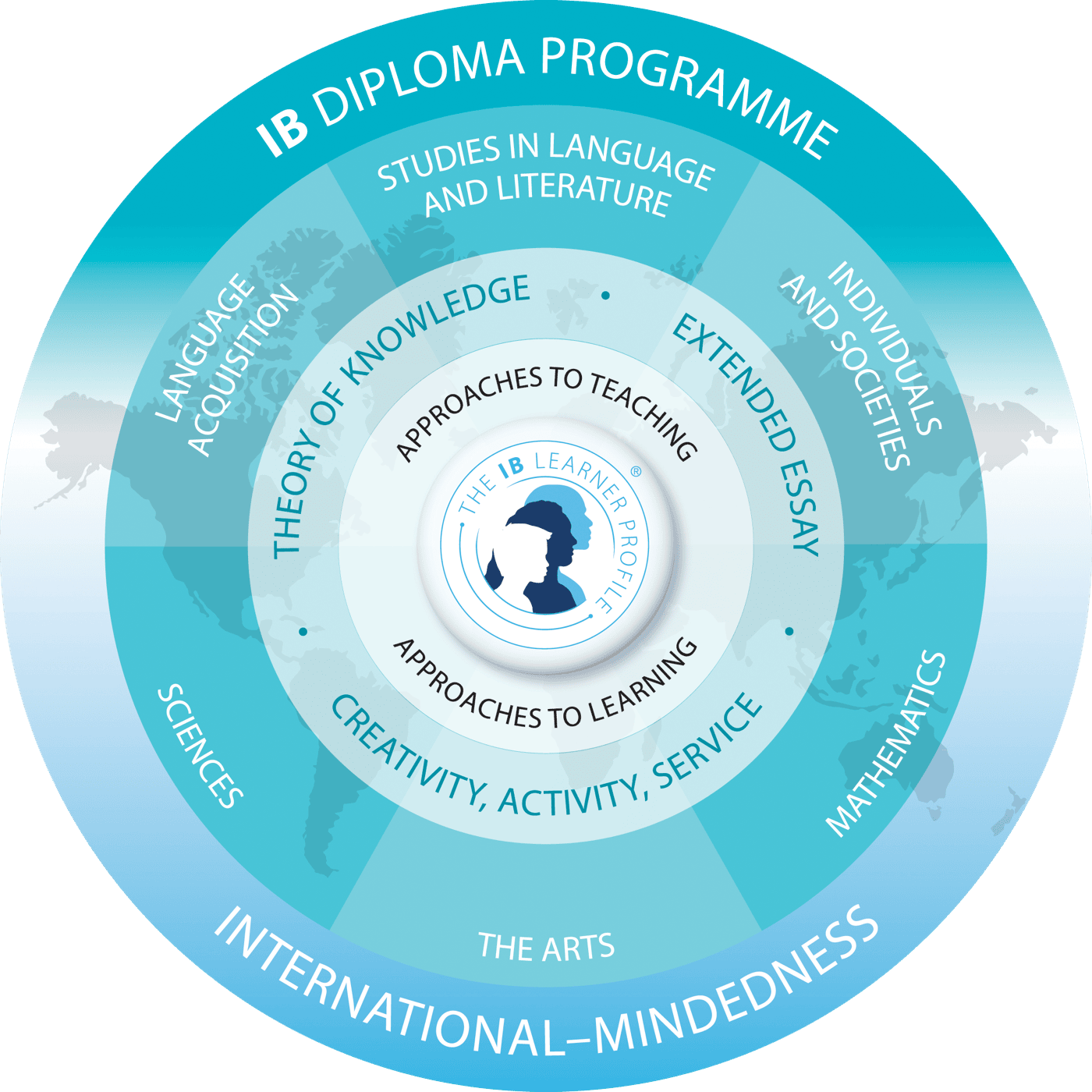
Theory of Knowledge
A cross-disciplinary course in critical and philosophical thinking that questions the nature of knowledge across all disciplines. It encourages reflection on how and why we know what we know.
Extended Essay
An independent, self-directed research paper of approximately 4,000 words on a student-chosen topic, with individual supervision. The first experience of rigorous academic research comparable to university level.
Creativity, Activity, Service
Holistic education beyond the classroom: creative projects, physical activity and community service. CAS develops social awareness and civic commitment as an essential part of the Diploma.
IB exam results
Exam Results May 2026
Congratulations to the class of 2026!
Exam Results May 2025
Congratulations to the class of 2025!
Exam Results May 2024
42/45 Highest grades
Congratulations to the class of 2024!
Exam Results May 2023
They pass all exams in all subjects and complete the DP core
6 SL subjects and 5 HL subjects above the world average
University of Bath · Loughborough University · University of Neumark · Maastricht University · University of Amsterdam · UIB · Universidad Complutense de Madrid · University of Navarre · CUNEF
Congratulations to the class of 2023!
Want to get to know us?
At Colegio San Cayetano we would be delighted to show you how we experience the IB Diploma Programme, taught in a bilingual format, and share our educational project with you.
Request information«The International Baccalaureate aims to develop inquiring, knowledgeable and caring young people who help to create a better and more peaceful world through intercultural understanding and respect.»

The IB aims to develop students who are knowledgeable, inquiring, communicators, open-minded, thinkers, risk-takers, caring, principled, informed, balanced and reflective.
This educational project promotes intercultural understanding and respect as an essential aspect of 21st-century life. These aims are summarised in the IB's mission statement.
In pursuit of this goal, the organisation works with schools, governments and international organisations to develop challenging international education programmes and rigorous assessment methods.
These programmes encourage students worldwide to become active, compassionate lifelong learners who understand that other people, with their differences, can also be right.
Students must take the three core subjects of the Diploma Programme: "Theory of Knowledge", "Extended Essay" and "Creativity, Activity and Service".
They must also choose one subject from each of the six groups, and may replace Group VI with a subject from Groups II, III or IV. Three subjects will be at Higher Level (HL) and three at Standard Level (SL). The language of instruction corresponds to the subject title.
The pathways shown in the table are indicative, both for subjects and levels. In some cases, depending on the intended degree, Higher Level (HL) should be chosen instead of Standard Level (SL). For example, for certain engineering programmes it is advisable to choose Physics HL.
| DIPLOMA PROGRAMME — INTERNATIONAL BACCALAUREATE. TWO-YEAR CYCLE 2026-28 | |
| DP CORETheory of Knowledge Creativity, Activity and Service Extended Essay | |
| Group | Subject |
|---|---|
| 1. | Spanish A: Language & Literature SL |
| Spanish A: Language & Literature HL | |
| 2. | English B NM |
| English B NS | |
| 3. | History* |
| Business Management* | |
| ESS NM | |
| 4. | Biology* |
| Physics* | |
| ESS NM | |
| 5. | Mathematics: Analysis & Approaches SL |
| Mathematics: Analysis & Approaches HL | |
| Mathematics: Applications & Interpretation SL | |
| 6. | Visual Arts SL |
| Visual Arts HL | |
| Global Politics* (G III) | |
| Chemistry* (G IV) | |
| German B NM (G II) | |
| German B NS (G II) | |
* Students heading towards a biomedical/health degree are advised to choose MATHEMATICS: Analysis and Approaches at SL, although it is not mandatory.
To ensure compliance with the IB DP teaching hours required for each subject, students may only revise their study plan until 12 October of the year they start the Diploma Programme. The change from SL to HL in subjects where this option is available, before exam registration (November of Year 2), is permitted until the same date as the subject change deadline.
According to current Balearic Islands regulations, switching from the Diploma Programme to the National Baccalaureate is only permitted until 1 February of the year in which the First Year of the DP is studied.
For more information about the IB and its programmes, visit http://www.ibo.org
The admission policy of Colegio San Cayetano for the IB Diploma Programme is necessarily based on principles of transparency, inclusion and equal opportunity, while fulfilling the IB educational mission. The limited number of Diploma Programme places requires admission criteria ensuring that applicant students are capable of successfully completing the full programme.
Admission for San Cayetano students
Admission to the IB DP is conditional on the personal interview result, 2nd-term academic results, and having completed Year 10 (4º ESO) with all subjects passed:
The personal interview with the student and parents or guardians assesses motivation and commitment to study, taking into account knowledge of the programme, the ability to balance academic and extracurricular life, the academic record (strengths and weaknesses) and attitude as a student.
Admission interviews take place during the last term of Year 10.
Families will receive the final admission decision once the Year 10 final results are published.
Admission for students from other schools or abroad
Students from other schools or abroad are assessed using the same criteria, with grades from the 2nd term at their previous school.
Enrolment of international students is formalised provided they hold the Year 10 qualification or equivalent.
In the event of equal conditions, San Cayetano students are given priority.
Admission for students wishing to join the DP in Year 2
Students already enrolled in the DP at another national or international school may transfer, provided their chosen subjects and levels match and they have completed the corresponding Year 1 CAS and Extended Essay hours.
Admitted students must complete the full programme, not just individual subjects.
Choosing the study plan
When approving the study plan for each DP candidate, Colegio San Cayetano will take into account, as far as organisationally and financially possible, their academic and professional needs and interests.
To ensure compliance with the IB DP teaching hours required for each subject, students may only revise their study plan until 12 October of the year they start the Diploma Programme. The change from SL to HL in subjects where this option is available, before exam registration (November of Year 2), is permitted until the same date as the subject change deadline.
According to current Balearic Islands regulations, switching from the Diploma Programme to the National Baccalaureate is only permitted until 1 February of the year in which the First Year of the DP is studied.
IB Language Policy
Language Philosophy of Colegio San CayetanoMission Statement
- All school teachers are language teachers.
- Language acquisition must be promoted collaboratively by all members of our community including parents, students, teachers and staff. Mother tongues support personal and cultural identity and must be respected.
- Shared language-learning experiences create cohesion among students from diverse backgrounds and promote International Mindedness.
- Learning world languages is an integral part of becoming a global citizen.
1.1 — Linguistic needs of the school community
(Understanding the particular circumstances of the school community: linguistic needs)
Sociocultural Context
The sociocultural reality of our students and families, with a very high percentage of Spanish-speaking and international families (see the 2020 and 2025 nationality tables), led the school to adopt Spanish as the language of instruction in Early Years, always in compliance with the various linguistic regulations in force at the time.
Language Project
The school currently develops its Language Project balancing the two official regional languages, the first foreign language (English) and a second foreign language (German), with the overall aim that students graduate proficient in three languages (Spanish, Catalan and English) and with an acceptable level of German.
Work begun in 2005-06, with the progressive introduction of European Sections in Secondary and from 2007-08 in Primary, aimed for Year 10 students to sit B2 English exams by 2014-15 and for Baccalaureate graduates to reach C1. In 2018-19, 44% of Year 10 students obtained the B2 certificate and 27% of Year 12 students obtained C1.
In 2023-24, 75.4% of Year 10 candidates passed B2 English and 53.8% of Year 11-12 candidates passed C1.
In recent years, Year 12 students have also been offered the C2 exam. Few sit it but results have been very satisfactory. In 2023-24, 8 students sat the exam and 7 passed.
As for German, by graduation students can sit A1-A2 examinations. In 2018-19, 100% of A1 candidates (Years 9-10) passed and 61% of A2 candidates passed. In 2023-24, 100% of A1 candidates and 85% of A2 candidates passed.
Students in Years 1-4 of Primary who are native speakers or wish to start German earlier are offered lunchtime extracurricular classes.
Similarly, students obtain Catalan B2 in Year 10 with a final grade of 8 or above, and C1 in Year 12 with a final grade of 8 or above.
In 2018-19, 38% of Year 10 students obtained the Catalan B2 and 65% of Year 12 students obtained C1.
In 2023-24, 29% of Year 10 students obtained the Catalan B2 and 61% of Year 12 students obtained C1.
1.2 — Mother tongue development and maintenance
Our school is located in a multilingual, not merely bilingual, environment. The Balearic Islands have two official languages (Catalan and Spanish), plus many others due to the large international population. Students commonly master up to 3 languages, which brings great cultural diversity and fosters an international mindset.
The languages of instruction for the DP are English and Spanish, as the school DP only offers one of the two co-official regional languages (Spanish A: Language and Literature). Students who wish, subject to sufficient demand, will be offered extracurricular sessions to prepare for the C1 Catalan examination before completing the DP (this examination is run by the relevant body of the Balearic Government).
1.3 — Language and cultural integration plan
San Cayetano is a private school whose students largely master both official regional languages and have a high level of English. Nevertheless, each year a small percentage of late-entry students do not fully master one of the three teaching languages; the school offers a three-year language integration programme.
As the DP is delivered bilingually (English-Spanish), students must master both languages even if neither is their mother tongue. Language A or B teachers provide effective support to students choosing this option.
School Language ProjectSubject–language correspondence
Subject areas taught in each language.
- Spanish is the language of instruction for literacy introduction.
- Catalan and English are developed at vocabulary and oral-expression level (Social Habits is taught in English).
The timetable and subjects are distributed as follows across all year groups:
- Spanish and Catalan: 5 hours per week each
- English: 3 hours per week
- Mathematics: 5 hours per week in Spanish
- Natural Sciences: 3 hours per week in English
- Social Sciences: 3 hours per week in Catalan
- Art and Music: 3 hours per week in Catalan
- Physical Education and Motor Skills: 2 hours per week in Spanish
- Religious Education: 2 hours per week in Spanish
In 2014-15, early learning of a second foreign language (German) was introduced in Upper Primary.
In addition to language subjects, the following are taught:
- Natural Sciences (Biology and Geology): in Catalan
- Physics and Chemistry in Years 9-10: in English or Catalan
- Mathematics: in Spanish, optionally in English for Years 9-10
- Social Sciences: in English
- Physical Education: in English
- Music: in Catalan
- Second Foreign Language: German
Since 2019-20, Mathematics can optionally be taken in English in Years 9-10.
The language of instruction in this post-compulsory stage at San Cayetano is Spanish.
The following subjects are offered in English:
- Year 1 Baccalaureate: Contemporary World History and PE
- Year 2 Baccalaureate: Business Economics
- Year 1 Baccalaureate: Biology, Geology, Environmental Sciences and PE
- Year 2 Baccalaureate: Business Economics and Biology
The languages of instruction for the IB are Spanish and English. The language of instruction for each subject is as follows:
- Spanish A: Language & Literature HL/NM in Spanish
- Language B: English HL/SL in English
- Language B: German HL/SL in German
- History in English
- Geographyin Spanish
- Business Management in English
- SAS in English
- Chemistry in English
- Biology in English
- Physics in English
- SAS in English
- Mathematics: Analysis and Approaches / Applications and Interpretation in Spanish
- Artes Visuales in Spanish
- Extended Essay in Spanish
- Theory of Knowledge in Spanish
- CAS — its own activities may also be carried out in Catalan, English or German
Language of internal mock examinations
Internal mock examinations are conducted in the subject's teaching language. If a student chooses a different language for external examinations, they may answer in their chosen language.
3.1 — Bilingual Diploma
A bilingual diploma is awarded to students who meet one or more of the following requirements (cf. A.2.2.3 of the Diploma Programme Assessment Procedures):
- Two languages from the Studies in Language and Literature group, with a minimum final grade of 3 in both.
- A subject from the Individuals and Societies or Sciences groups in a language other than the Language A. The student must achieve a minimum final grade of 3 in both the Language A and the Individuals and Societies or Sciences subject.
- Pilot and interdisciplinary subjects count towards the bilingual diploma, provided the above conditions are met.
- An extended essay
- A school study programme
- An additional subject beyond the six diploma subjects
Students decide during the two years which language to use for external examinations. The deadline is November, when official exam registration takes place.
Teachers of subjects taught in a different language from the student's chosen exam language will provide appropriate technical material in the exam language.
All teachers, within their subject area, are also language teachers and must always use appropriate language and encourage its correct use among students.
Language Teaching Methodology
The various Language Departments take a unified approach to teaching methodology; the communicative approach is used in all cases, developing linguistic competence through the four basic skills: listening, reading, speaking and writing.
Other complementary language learning activities run by the departments include:
- Sitting Cambridge examinations for CEFR qualifications.
- Exchange programme with a school in the USA.
- Conversation classes with native speakers throughout Secondary.
- Business School: entrepreneurship activity, business economics and trilingual final event.
- Extracurricular debate and oratory in English, with participation in various leagues alongside other schools and institutions including the Rotary Club Calvià and the Fundación Actívate public speaking contest.
- Participation in the English Olympiad at UIB.
- In the IB, the G4 activity is planned.
- Sitting Goethe-Institut examinations.
- Exchange programme with a school in Hannover.
- Conversation classes throughout Secondary with a native speaker.
- Celebration of the Jocs Florals in Year 10, an annual literary and artistic contest in which Year 11-12 students may also voluntarily participate by writing poems.
- Participation in the Coca Cola narrative writing competition (Secondary).
- Participation in the Coca Cola narrative writing competition (Secondary).
- Extracurricular debate and oratory in Spanish, with participation in various leagues (MEP: Model European Parliament, etc.) alongside other schools and institutions including the College of Economists, Fundación Actívate, Clave Consulting and ESIC.
Spelling and Reference Citation ProtocolsPreferred styles for presenting the bibliography
The APA referencing method has been chosen, as currently used by UIB (biblioteca.uib.cat — Estilo APA) and the school has a style guide for National Baccalaureate research projects, which can also be applied to the IB:
Language recommendations and requirements
Given the DP subject offering at San Cayetano, a B2 level in English is recommended to follow English B HL and the G3 and G4 subjects taught in English.
Bibliography
- "Guidelines for developing the school language policy." International Baccalaureate Organization, 2008.
- "Guidelines for school self-reflection on language policy." International Baccalaureate Organization, 2012.
- "The Diploma Programme: from principles to practice." International Baccalaureate Organization, 2015.
- Language Policy of Colegio San Cayetano.
- PMS 2018-19.
Appendix — Change log
| Rev. | Change | Date |
|---|---|---|
| 0 | Initial document edition. | 28/06/2021 |
| 1 | 1.1 Linguistic needs of the school community · 2. School Language Project · 3. Language of internal mock examinations · 3.1 Bilingual Diploma · 5. Spelling and Reference Citation Protocols · 6. Language recommendations and requirements | 17/02/2025 |
| 2 | 6. Language recommendations and requirements. | 25/06/2025 |
Academic Integrity Policy IB
Definition, policy objectives and responsible parties
This document informs the San Cayetano IB Diploma Programme (DP) community about the school's academic integrity policy. Its principles are grounded in the general academic integrity document produced by the IB DP as a guide for all DP schools.
A fundamental objective of the IB DP is to develop individuals who contribute to improving their environment with honesty and integrity, as reflected in the IB Learner Profile. Academic integrity is therefore a core principle for the entire IB community.
This policy defines what constitutes malpractice and its possible sanctions, and sets out the procedures San Cayetano will follow to inform the IB community of its contents.
This policy applies not only to written examinations but to any activity or assessment the school considers part of the evaluation process.
To ensure academic work based on integrity and honesty, the school trains DP students through workshops coordinated by the Extended Essay coordinator, shares all relevant integrity policy information with teachers and families, and encourages activities that help students understand the importance of acting with integrity, beyond merely knowing the rules.
1.1 — Persons responsible for the Academic Integrity Policy
1.1.1 — Students and families
As stated in the IB Learner Profile, students must strive to be "principled" and to "act with integrity and honesty, with a strong sense of fairness and justice, and with respect for the dignity and rights of people everywhere." IB students and their families must commit to this academic honesty policy and avoid any misconduct.
Parents or legal guardians, as primary educators, must promote principled behaviour in their children and collaborate with the school in upholding this policy, always avoiding improper behaviour such as providing excessive help with academic work.
1.1.2 — Teachers and School
The DP teaching staff, together with the Extended Essay Coordinator and the Librarian (responsible for promoting academic integrity), play a fundamental role in developing pedagogical strategies to ensure students act with integrity in their lives, and especially in their studies and research.
The school will integrate this Academic Integrity Policy across all educational stages, adapting its terms to each stage, so that all San Cayetano students embrace integrity as a defining trait.
1.1.3 — Academic Integrity Committee
San Cayetano will establish an Academic Integrity Committee comprising:
- A representative of School Management
- The Diploma Programme Coordinator
- A representative of the DP teaching staff
- A representative of the school teaching staff
- The Librarian who, as regular promoter of the Academic Integrity Policy, acts as instructor in cases of conduct contrary to integrity
- A representative of DP students, selected by the Head from a shortlist presented annually by the students
Its functions are essentially three:
- Educational: promoting good practices in examinations, assignments and research.
- Corrective: proposing appropriate sanctions to the Head for serious breaches of academic integrity.
- Evaluative: analysing incidents annually and proposing corrective and preventive actions to the Head for approval.
What constitutes malpractice?
2.1 — By Colegio San Cayetano
The IB defines school malpractice as an action by the school or any person associated with it that breaches IB rules and regulations, posing a threat to the integrity of IB examinations and assessments.
Some of the categories we consider school malpractice are:
- Excessive help from teachers during in-class work, whether unintentional or well-meaning.
- Granting students extra time without prior IB authorisation.
- Having insufficient supervisors and/or supervisors without adequate training.
- Failing to supervise students who need to use the toilet during an exam.
- Allowing the subject teacher of the exam being taken to enter the exam room and help their students.
- Failing to check material used during the exam (calculator, dictionaries or data booklet).
- Failing to store exam material securely or accessing exam content before the scheduled time.
- Failing to report misconduct to the IBO.
- Failing to follow any of the instructions in the IB examination conduct guide.
2.2 — Student malpractice
"The IB defines misconduct as any action (whether deliberate or unintentional) by a student through which that student or a third party gains, or may gain, an unfair advantage in one or more assessment components. Actions that could harm other students are also considered misconduct." International Baccalaureate Organization, 2019, p. 4
Likewise, any action that could threaten the integrity of IB examinations and assessments is considered misconduct.
The following behaviours are considered fraudulent.
- Loss of integrity, when work is no longer considered the student's own because it has received external help — whether from teachers, parents, another student or ChatGPT.
- Re-using the same work in different assessments.
- In paper or on-screen exams: unless stated otherwise, notes, mobile phones, IT devices, etc. are not permitted. Misbehaviour during the exam and inappropriate use of social media are penalised, given the risk of sharing exam materials, exam content or class work.
- Using obscene, offensive or irrelevant comments instead of answering the question, as a form of misconduct.
- Plagiarism, understood as the use (intentional or not) of another person's ideas, words or work without adequate, clear and explicit acknowledgement. San Cayetano requires assignments to be submitted via Google for Education Classroom, with the platform's plagiarism detector enabled.
- Collusion, where an enrolled student's behaviour contributes to another enrolled student's misconduct (for example, by letting them copy their work or present it as their own).
- Any action that allows a student to gain unfair advantage (e.g. falsifying CAS documentation, or revealing or receiving confidential exam information within 24 hours of an exam through any means of communication).
Both San Cayetano and the IB will take action regarding alleged student misconduct, regardless of the assessment session.
Protocol for handling student malpractice
3.1 — Written examinations and internal assignments
This section covers incidents during in-class work or school-administered examinations.
3.1.1 — Incidents during written examinations
If the supervising teacher detects conduct contrary to academic integrity during a written assessment, depending on the timing and severity they may:
- Warn the student to stop, noting that continuing could result in a later sanction.
- Mark the work completed up to that point and allow the student to continue.
- Terminate the examination for that student.
In all cases, once the exam ends, the teacher immediately reports the misconduct to the Programme Coordinator, who initiates the review procedure following protocol 3.2.
3.1.2 — Incidents relating to in-class assignments
- No teacher will accept an assignment without the signed Original Authorship Declaration.
- If plagiarism is found in the final assignment, it will be failed and marked as not submitted for external assessment, and the student will be unable to receive a final grade in the subject.
- The same applies to the manipulation or fabrication of data.
- Or to using essay-writing assistance services or other assessment aids.
- If there is a problem with the final version of an assignment before the IB submission deadline, another version may be submitted. However, students should be aware that the school will send whatever the student submits but will notify that plagiarism is suspected or known.
- If misconduct is detected after the work has been submitted, the coordinator will inform the IB as soon as possible.
3.1.3 — Incidents relating to external or internal assessment examinations
The school must follow all instructions in the relevant IB examination conduct documents and ensure that exam supervisors and students understand the rules. (International Baccalaureate Organization, 2019)
Students must not bring any unauthorised material into the exam room (notes, mobile phones or other IT devices) and must follow the supervisor's instructions. Any student found with unauthorised materials is in breach of regulations, regardless of intent or whether the material was used, and the IB will investigate.
Students fail to follow ethical and honest practices when they:
- Disrupt an examination through misconduct, such as distracting another student or causing a disturbance.
- Exchange, provide or attempt to provide information related to the examination.
- Impersonate another student.
- Remove examination papers.
- Reveal or discuss the content of an exam paper with anyone outside the immediate school community within 24 hours of the exam.
Helping students from the same or another school to engage in misconduct is also a serious infringement.
If a student has committed a breach, the school must inform the IB within 24 hours of the exam. The student should be allowed to continue the exam unless their presence is harmful to others. The written exam should be sent for assessment as usual.
The IB may impose additional sanctions for malpractice in one or more exams. It may change the student's registration category to "Courses", allowing them to repeat the subject but not obtain the IB diploma; or it may permanently disqualify them from the current and/or other programmes, awarding no grades in any subject and barring any resit.
3.2 — School response protocol
If a student commits malpractice, San Cayetano follows this protocol:
- The teacher reports the incident with appropriate evidence to the Programme Coordinator who, if it is considered a serious breach, assigns the tutor to handle the procedure. Minor cases are resolved with a formal warning and communication to parents through the school's usual channels (email and/or student diary).
- The tutor meets the student, who has the opportunity to explain the detected malpractice. The subject teacher and class tutor may also be summoned. Parents or guardians are notified beforehand and may attend the meeting.
- If parents or guardians were not at the first meeting, they are invited, together with the student, to present their arguments before the report is submitted to the Committee.
- If, after hearing all parties, the instructor determines malpractice occurred, it is recorded on the subject report and the student's personal file, and the Academic Integrity Committee votes on the proposed sanctions.
Sanctions for malpractice may include the following:
- A formal warning to the student,
- repetition of the test or assignment,
- a grade of 0 for that component, and
- for repeated misconduct, the Academic Integrity Committee may propose to the Head that the student be removed from the Diploma Programme; the student and their parents or guardians may submit written arguments to reduce the sanction.
3.3 — IB response protocol
In cases of school malpractice, the school follows the protocol set out in the IB examination conduct guide.
For student malpractice, the IBO sanction tables can be consulted at: resources.ibo.org — IB Academic Integrity
Academic integrity policy regarding AI use
All matters relating to artificial intelligence use are set out in this document (link), which serves as an appendix to the integrity policy.
Measures planned by the school to communicate this policy to the educational community
The following measures will be carried out by the school to inform and raise awareness of its academic integrity policy:
- The policy will be available at all times to the teaching and non-teaching staff of the school.
- The policy will be available to parents and students on the school website.
- Students will receive workshops from the extended essay coordinator on how to produce it, in the first months of the Diploma Programme. These workshops aim to:
- Teach how to produce a good extended essay, always taking into account the academic integrity policy of the school and the IB.
- Introduce the different citation and referencing methods and the software applications developed for this purpose.
- Establish the citation system to be used that year (using as reference the citation system in use at the time at the University of the Balearic Islands).
- Raising student awareness of the importance of legitimate work, not only in the extended essay but in all work produced throughout the Diploma Programme.
- Explaining what the school defines as malpractice and the protocol it follows in a malpractice case.
- The Librarian will advise students at all times on good academic integrity practices.
- Subject teachers will remind students of this policy whenever they must submit an assignment for that subject.
- The extended essay coordinator will remind extended essay teachers and supervisors of this policy annually.
- Before enrolling in the DP at San Cayetano, students and their parents or legal guardians sign their acceptance of the Integrity Policy and their commitment to promoting it in their daily work as DP students.
- The student and parents/guardians must sign a personal contract setting out the basic terms and requirements for the student in developing the extended essay.
Bibliography
- International Baccalaureate Organization (2019). Academic integrity. Retrieved from resources.ibo.org — IB Academic Integrity
Appendix — Change log
| Rev. | Change | Date |
|---|---|---|
| 0 | Initial document edition. | 28/06/2021 |
| 1 | General document revision. | 27/06/2025 |
IB Assessment Policy
What is the philosophy and principles underpinning our assessment practice?
Quoting the IB philosophy verbatim:
"The IB Diploma Programme (DP), aimed at young people aged 16 to 19, is a rigorous and balanced educational programme that provides excellent preparation for university and adult life. The DP aspires to develop informed, inquiring students who are also caring and sensitive to the needs of others, and it fosters intercultural understanding, open-mindedness and the attitudes needed to respect and evaluate different points of view. The DP approaches to teaching and learning are the deliberate strategies, skills and attitudes that permeate the teaching and learning environment. In the DP, students develop Approaches to Learning skills across five categories: thinking, research, social, self-management and communication skills."
The student is at the centre of learning. IB community teachers strive to develop students with the following attributes:
Assessment is therefore based on achieving these attributes.
StudentsTo determine whether the required knowledge is being achieved, school assessments are developed in line with each subject's requirements (guides), similar in nature to the official IB external exams, assigning a numerical grade (1 to 7) per subject according to each subject's grade bands. Assignments and projects may also be considered to estimate a component of the official DP internal assessment. The bands (1 to 7) establish where each student stands.
TeachersTo determine whether appropriate teaching methodologies are being followed.
Pathway designDiploma Programme — International Baccalaureate · Two-year cycle 2025–27
| Group | Subject |
|---|---|
| DP CORE — Theory of Knowledge · Creativity, Activity and Service · Extended Essay | |
| 1 | Spanish A: Language & Literature SL |
| Spanish A: Language & Literature HL | |
| 2 | English B NM |
| English B NS | |
| 3 | History * |
| Business Management * | |
| ESS NM | |
| 4 | Biology * |
| Physics * | |
| ESS NM | |
| 5 | Mathematics: Analysis & Approaches SL |
| Mathematics: Analysis & Approaches HL | |
| Mathematics: Applications & Interpretation SL | |
| 6 | Visual Arts SL |
| Visual Arts HL | |
| Global Politics * (G III) | |
| Chemistry * (G IV) | |
| German B NM (G II) | |
| German B NS (G II) | |
- Students must choose 3 Higher Level and 3 Standard Level subjects. During the first month of Year 1 IB they may trial subjects they are unsure about.
- Students choosing Mathematics: Analysis and Approaches HL are strongly advised to take 4 HL subjects in the first year.
- Students choosing Chemistry HL are strongly advised to take 4 HL subjects in the first year.
- Students choosing Global Politics HL are strongly advised to take 4 HL subjects in the first year.
- This way, the following year they can choose which subject to drop to SL without issues regarding the number of HL subjects.
Assessment designWhat, how and when is assessed
3.1 — What is assessed
In general, written content tests of similar format and difficulty to the official exams (mock exams) are used, covering all content taught up to that point. Internal assessment components (lab reports, oral exams, etc.) are also assessed, each subject adapted to its assessment type.
Table 2.1 — Difference between internal and external assessment:
- Mock exams (written)
- Oral exams in language subjects
- Written tasks (ToK exhibition)
- Lab reports of prescribed practicals
- Theory of Knowledge essays
- Science explorations
- Extended essays
- Scientific investigations in Physics, Chemistry, Mathematics, ESS, etc.
- Comparative study and Process Portfolio in Visual Arts
- Visual Arts exhibition
Assessment in the DP must:
- Strongly emphasise authentic performance assessment and higher-order cognitive skills (application, analysis, evaluation and synthesis), following the approaches to teaching and learning for these skills.
- Reflect real-world situations and have students demonstrate their knowledge, understanding and skills to answer research questions or by creating a product.
- Value the process and thinking behind the work, as well as the final product.
- Support and encourage good teaching and learning practices, following the Academic Honesty Policy and the IB approaches to teaching and learning.
- Be a useful and engaging activity through which students learn and practise how to apply important knowledge and skills for authentic purposes.
- Elicit the demonstration of both higher-order cognitive skills and knowledge and understanding.
-
Demonstrate knowledge and understanding of the following:
- Relevant facts and concepts.
- Relevant methodologies and techniques.
- Relevant values and attitudes.
-
Apply this knowledge and understanding to the analysis of:
- Explanations, concepts and theories.
- Data and models.
- Case studies in novel and unfamiliar contexts.
- Arguments and value systems.
-
Evaluate, justify and synthesise the following, where appropriate:
- Explanations, theories and models.
- Arguments and proposed solutions.
- Fieldwork and research methods.
- Cultural viewpoints and value systems.
-
Address investigations of environmental and social issues at local and global scale through:
- The evaluation of the political, economic and social contexts of the various issues.
- The selection and application of appropriate research and practical skills needed to carry out the investigations.
- Proposing innovative and collaborative solutions that demonstrate awareness of and respect for cultural differences and the value systems of others.
These aims and assessment objectives are developed based on research, questionnaires completed by schools and the international dimensions of the subject (or group). As well as being designed to support the aims and pedagogy of DP subjects, the assessment models are developed considering validity, reliability and manageability. When designing assessment instruments, the IB ensures all assessment objectives can be assessed appropriately, minimising bias and maximising comparability. While not all assessment objectives need to be assessed in every component, they are assessed proportionally across all components.
Assessment is a continuous cycle, so experience from previous sessions informs the assessment design and exam preparation of future sessions. The IB continues to develop quality-control mechanisms so that assessments deliver valid and reliable results for students. These include reviews, clarifications and general comments, as well as the analysis of results and the internal assessment process that the IB provides to the school for each subject and session.
For more detailed information about IB assessment, visit the Programme Resource Centre and the IB website.
3.2 — How it is assessed
Although the subject syllabi detail the various assessment methods, two types frame them: formative and summative.
The teacher should set formative assessments that challenge students at an appropriate level and continually adjust that level as students progress.
In other words, formative assessment is interested in why the student does something, while summative assessment is concerned with whether the student has done things correctly.
3.3 — Non-significant adaptations for students with SEN
—
- Separate (isolated) room
- Modifications to the exam format
- Repositioning in the classroom
- Access to 25% additional time
- Presence of an assistant or nurse
- Access to graphic organisers 🔷
- Use of access materials (braille boards, filter glasses, amplifiers, etc.)
- Scribe/Reader
- Presence of an interpreter
- Word processor (with or without spell-check)
- Clarifying exam instructions
- Speech recognition software
- Naming colours
- Calculadoras (+ - × /) 🔷
- Breaks
- Extended submission deadlines
- Care assistant
- Additional opportunities (more than 3)
- Access to reasonable adjustments
3.4 — Assessment periods and examinations
At San Cayetano, the IB assessment periods are termly, with three assessments per school year. In Year 1, these are before Christmas, before Easter and just before the end of the year. In Year 2, the assessment periods are before Christmas, in February-March, and in May the IB External Exams take place. Only these May exams of Year 2 count towards the university entry grade; all other marks are internal and contribute to the predicted grade.
The assessment periods are set by the School Secretary, proposed by the GCCA and the IB Coordinator and approved by the Head, in June of the previous school year. This is communicated to all teachers by email and/or by sharing the assessment calendar, located in the relevant school-year Drive folder and accessible to all teachers.
A period of one to two weeks of exams is set for each assessment, during which students have no classes. The exam timetable is prepared by the IB Coordinator and approved by the Head, with a maximum of two exams per day.
Exam duration is progressively adapted to become more similar to the official exams as the year advances, and depends on the subject's characteristics.
Assessment is continuous and activities must be varied: written tests, exam preparation activities such as past-paper questions or mock tests, presentations, research projects, etc.
Exams indicate the numerical score per question, the percentage and the grade boundary, so students have this information.
The final subject grade is calculated using the paper percentages, the weighting of each paper and the grade boundary.
In cases of student malpractice during an exam, the rules defined in the Academic Integrity Policy apply.
The student chooses the response language for assessments from the official IB languages: Spanish, English, German or French.
3.5 — Assessment meetings
In Year 1 IB there are three assessment meetings, one for each of the three assessment periods, plus the extraordinary September session. In Year 2 there is an assessment meeting before Christmas and another after the internal assessment.
Assessment meetings are convened at least fifteen days in advance by the IB Coordinator, with the approval of the Secondary-Baccalaureate Deputy Head and the Head.
At the extraordinary September assessment meeting, decisions on promotion or non-promotion are taken according to point 3.1.
The general features of assessment meetings and grade reporting are defined in the Academic Assessment Procedure Manual and are common to all educational stages of the school.
How grading works
4.1 — School grades and Internal Promotion
IB students receive a school grade for each IB subject and a progress report for each core subject at the end of each assessment in Year 1 and at the end of the first two assessments in Year 2.
Each school assessment period includes both quantitative (summative) and qualitative (formative) grades. Quantitative grades follow the DP model, while qualitative grades report on the student's current progress, attitude and predicted future development.
ToK, Extended Essay and CAS components have a qualitative grade (Pass / Fail), while other subjects use quantitative grades from 1-7, following the Diploma Programme model.
The IB and National Baccalaureate equivalences are:
| IB | National Bacc. |
|---|---|
| 7 | 10 |
| 6 | 9 |
| 5 | 8 |
| 4 | 7 |
| 3 | 6 |
| 2 | 5 |
Assessment is continuous and divided into three terms.
Requirements to progress to Year 2: a minimum of 23 points in the June mocks, excluding the Extended Essay and ToK grades.
In June:
- Every student must sit the September exam for subjects in which they scored below 3.
- If the teaching staff deems it appropriate, students may sit 1 or 2 subjects (proposed by the staff) in which they scored a 3, in order to reach 23 points or the 12 HL points.
- If a student has more than 23 points and a subject with a 3, the subject teacher may propose a September resit. The student makes the final decision.
- If a student has 4 or more subjects below a 3, they repeat the year directly, with no September resit option.
- June Year 1 IB grades are conditional on the submission of IAs (Internal Assessments) and Extended Essays or CAS in June. If a student does not submit the IA by the teacher's June criteria, a 0 is counted for the IA weighting.
- If a student has a FAIL in the Extended Essay and CAS in June, they must resubmit in September.
Extraordinary sessions:
A September session is held. Grades cannot go down; if the student does not reach 23 points or has a 1, they must repeat Year 1.
Internal promotion:
To progress: the student must achieve at least 23 points across the 6 elective subjects. The Extended Essay, ToK and CAS reports are also taken into account.
4.2 — Obtaining the IB Diploma
According to IB guidelines, the following conditions must be met to obtain the IB diploma:
Students who obtain 24 points or more and also meet the following general requirements will be awarded the diploma:
- a)Numerical grades have been awarded in the six subjects registered for the IB diploma.
- b)All CAS requirements have been met.
- c)At least a grade D has been awarded in both Theory of Knowledge and the Extended Essay.
- d)No grade of 1 has been obtained in any subject.
- e)The final award committee has not found the student guilty of fraudulent conduct.
- f)A grade of 2 has not been obtained three or more times (including SL and HL subjects).
- g)A grade of 3 or below has not been obtained four or more times (counting SL and HL subjects).
- h)At least 12 points have been obtained in Higher Level subjects (for students registered in four HL subjects, the three highest grades count).
- i)At least 9 points have been obtained in Standard Level subjects (students registered in two SL subjects must obtain at least 5 points at this level).
4.3 — What happens if I do not obtain the Diploma?
Exam reviews can be requested; in the IB this is called a category 1 enquiry upon results. The student and family must sign an authorisation because the grade may go down. Enquiries are processed on 9 July (if the Diploma was not obtained) and 10 July (to raise a grade), from 9:00 to 13:00 at the school, after speaking with the subject teachers. The IB charges an 88€ fee per exam enquiry; the process is completed once the amount is paid at the school office.
If the reviewed exam grade changes, the IB refunds the fee, so the school will refund the amount previously paid.
Students may sit any subjects they wish in the November session — whether they were a few marks short of a higher grade, have significant room for improvement, or need total points from their HL or SL subjects.
For each subject they sit, they retake the exams and may choose whether to resubmit the non-exam components:
- Language A — oral (SL/HL) · essay (HL)
- Language B — oral (SL/HL)
- History, Business Management, ESS, Global Politics (NM/NS) — Internal Assessment
- Physics, Biology, Chemistry (NM/NS) — Internal Assessment
- Mathematics (AA HL/SL and AI SL) — Internal Assessment
- Visual Arts (SL/HL) — Comparative Study
- Extended Essay
- Theory of Knowledge: Essay
If a Diploma-category student repeats a subject at the same level and in the same response language, the highest final grade counts for the diploma.
Once results are released in July, students have one week to decide whether to register for any November subject. The San Cayetano registration deadline is 15 July.
If a student wishes to resubmit internal assessment work or a non-exam component, they must attend classes at the school from the official start of classes, registered for the session as a Repeat candidate. This is because the subject teacher must provide academic guidance, mark the internal assessment work and confirm the original authorship of all work.
Students' Classrooms and corporate emails remain open so they can contact subject teachers and ask for guidance if needed.
If a student wishes to resubmit internal assessment work or a non-exam component, they must contact the teacher to plan the work to be done over the summer.
- Deadline: 10 SeptemberExtended Essay · Theory of Knowledge: essay · Language A: Language and Literature HL (essay) · Visual Arts: comparative study.
- Deadline: 15 OctoberAll internal assessment components · individual oral of Language A: Language and Literature · Language B oral.
- Deadline: 25 OctoberExternal assessment components: Visual Arts — process portfolio.
- From 1 SeptemberIf the laboratory is needed for the IA, the student may use working days to carry out their practicals.
In September, the programme coordinator informs students of the exam calendar and confirms the external components or Internal Assessments they will sit.
To withdraw registration for the November session, the deadline is 20 October.
4.4 — Resit protocol (November session)
Students and families must complete a registration form and choose between:
San Cayetano establishes that a student may sit at the school for a maximum of four sessions.
Assessment process
The International Baccalaureate® (IB) Diploma Programme (DP) assesses student performance through a combination of internal and external assessment components.
In the DP, the external exams at the end of the programme form the main basis of assessment due to their high objectivity and reliability. These exams are marked externally, with no influence from the subject teacher at our school on the result.
There is also an internal assessment component (the IA in subjects, the Theory of Knowledge essay and the extended essays). This internal work, completed by students throughout the programme, is supervised by the subject teacher, who verifies authorship and uses IB-provided rubrics to ensure it meets the required standards. This internal marking is moderated externally, so the grades awarded are reviewed for compliance with the criteria. In the core subjects (CAS, extended essay and ToK), external marking also applies, with the school teacher guiding the work and verifying its academic honesty and submission.
Each of the internally assessed components is marked by the subject teachers. Some of these are also moderated externally by the IB.
For the extended essay, any school teacher may supervise, provided they have had prior training with the extended essay coordinator and follow the IB-provided guide.
In addition, both the responsible teachers and the coordinator ensure the diploma requirements are met, such as the number of teaching hours, completing the CAS programme or the Group 4 collaborative project — ungraded but required by the DP.
5.1 — External assessment
External exams: Exams take place at the school following the official IB exam calendar. There are 2 assessment sessions, one in May and one in November. After each exam, it is sent by certified mail to the specified marking centre. The IB sends the exams to official examiners for marking. Official grades for these two external sessions are received in July and December.
Extended Essay: Worked on individually with a supervisor. The assessment result is communicated through a letter code (A to E), where an E means the diploma is not obtained.
ToK: The essay is worked on with the help of the ToK teacher and assessed externally. Results are communicated using the same letter code as the extended essay.
5.2 — Internal assessment
Internal assessments (IA): Internally marked work/tests count for a % of the subject grade. Each teacher marks based on rubrics predefined by the subject guide. The school teacher marks the work and uploads a sample to the IB system; this sample is moderated to ensure marking follows IB standards.
ToK: The internal assessment includes the ToK exhibition, which counts for a % of the total subject grade. This component is also moderated externally.
5.3 — Assessment quality control
First, before each academic year begins, the grading and assessment process is harmonised, ensuring teachers know the band system and marking rubrics, the exercise scoring system and the process for obtaining the subject grade with the percentages of each component and/or exam. The coordinator verifies during assessment boards that this process is appropriate, supervises teachers through regular (termly) meetings and pays special attention to teachers new to the system. This ensures the grades awarded faithfully represent those students will receive in the official external assessments.
Each term, the teaching staff carries out internal moderation to ensure assessments meet IB standards. In subjects with more than one teacher, cross-marking of exams and Internal Assessments is done to ensure consistency in grading criteria and promote internal standardisation. Within subjects of the same group, common criteria are discussed, rubrics shared and cross-marking done with examples from previous years. Conclusions from workshops, training courses and IB teacher networks are also shared to apply them consistently across all DP subjects.
Communication of assessment criteria
Via the school website, with all necessary information on each subject's assessment criteria, exam calendar and submission deadlines for internal and external tasks, available to students and families.
A meeting before the school year starts to explain the specific characteristics of the IB, assessment and assessment criteria (internal and external).
At the start of the year, each teacher explains the assessment criteria for their subject and IB core component.
Recording and communicating results
Grades are recorded and communicated to students via the ALEXIA platform, in the format defined in the school Procedure Manual MP-PC_03.6 (Academic Assessment), common across the whole school.
Final IB grades can be checked individually in early July on the IBO results publication page.
Analysis of results and review of the assessment policy
Academic results are analysed termly by departments and by the Pedagogical Coordination Committee, and annually in departmental end-of-year reports and the Management Review Report.
For the IB Diploma Programme, the San Cayetano teaching staff reviews the Assessment Policy, analysing academic results, supervising and coordinating the assessment criteria for each subject and core component, and taking measures deemed appropriate for continuous improvement.
Bibliography
- "Guidelines for developing a school assessment policy in the Diploma Programme", International Baccalaureate Organization (2019).
- "MP-PC_03.6 (Academic Assessment)" of Colegio San Cayetano (last revised: 30/05/16).
- "IB assessment principles and practices: quality assessments in the digital age".
- "About IB assessment".
- "IB assessment principles and practices: assessment guide for students and their parents or legal guardians".
- "IB assessment principles and practices: assessment guide for teachers and coordinators".
Appendix — Change log
| Rev. | Change | Date |
|---|---|---|
| 0 | Initial document edition. | 01/02/2021 |
| 1 | Section 3.1 Internal promotion → Extended Essay and CAS report | 18/10/2021 |
| 2 | Section 3.1 Internal promotion | 26/04/2022 |
| 3 | Section 3.1 Internal promotion | 28/06/2022 |
| 4 | Section 3.1 Internal promotion | 06/06/2023 |
| 5 | Section 3.1 Internal promotion | 18/09/2023 |
| 6 | Section 3.1 School grades and Internal Promotion | 15/05/2024 |
| 7 | Apartado 3.3 What happens if I do not obtain the Diploma? | 15/01/2025 |
| 8 | Section 3.4 Resit protocol (November session). | 15/01/2025 |
| 9 | Apartado 2. Pathway design. | 21/02/2025 |
| 10 | Apartado 3. Assessment design. | 21/02/2025 |
| 11 | Apartado 3.4. Assessment periods and examinations. | 11/03/2025 |
Inclusion Policy
Colegio San Cayetano · International Baccalaureate
Purpose of the Policy
This document informs, documents and guides the support San Cayetano provides to IB students who experience difficulties affecting access to the teaching-learning process and assessments. It must be available at all times and serves as a reference for applying support and adaptation measures. Its procedures are subject to school regulations and other policies such as the Assessment Policy and the Admission Policy, which govern other aspects of the IB DP. This policy includes procedures and references to facilitate the implementation of the various measures available.
General Principles
San Cayetano reaffirms its commitment to an educational model that embraces diversity, recognising each student's individuality and their right to support in areas of difficulty in order to reach their full developmental potential. School staff are trained in inclusive education methodologies and must apply them when necessary.
The Diploma Programme already incorporates attention to diversity as a fundamental educational pillar. The IB holds that all students must have the opportunity to demonstrate their abilities under the most equitable assessment conditions possible, while maintaining the required learning standards.
Broadly, the IB methodology for supporting diverse learners resembles what we apply at San Cayetano, with some adjustments to extend this policy to the teaching-learning context (not only assessments), tailoring specific actions to each student's needs and eliminating learning barriers.
Accommodations and reasonable adjustments must never alter the learning standards set by the IB Organisation. Their purpose is to eliminate or reduce the barriers associated with a difficulty that a student encounters when accessing content or having their knowledge assessed.
Incorrect application of these inclusion principles may result in a student not obtaining the diploma.
Terminology changes
The IB proposes a series of terms that should be adopted when supporting these students.
| Traditional Format | IB Format |
|---|---|
| ACNSNon-significant Curriculum Adaptations | AIAInclusive access accommodations |
| NEAESpecific Educational Support Needs | NEASpecific Access Needs |
Cases of application
- Use of a foreign language
- Cultural variations
- Difficulties in calculation, hearing, speech, reading and writing
- Intellectual and processing abilities
- Medical conditions (physical and mental)
- Socio-emotional difficulties
Long-term learning support needs
- Attention Deficit Hyperactivity Disorder (ADHD)
- Specific Learning Disorder (Mathematics)
- Specific Learning Disorder (Reading)
- Specific Learning Disorder (Writing)
- High Intellectual Abilities
- Hearing / vision problems
- Mental health
- Students with physical disabilities
- Communication or Autism Spectrum disorders
Student's temporary medical condition
- Temporary illnesses
- Medical conditions
Resources available for supporting students with access needs
IAA — Inclusive Access Accommodations
Inclusive Access Accommodations: IAA or inclusive accommodations are all measures that can be adopted to help a student with difficulties access knowledge and skills on equal terms with their peers. They can occur in two areas:
IAA in the Teaching-Learning Process
These are all measures during a lesson that help a student with difficulties get the most out of it. This requires knowing the difficulties associated with each diagnosis and being able to identify when a given student may be limited.
| Difficulty | Proposed IAA |
|---|---|
| The student has reading difficulties | Underline only the key words of each topic and give feedback on errors. |
| The student has difficulty concentrating | Ask them to repeat the instructions given |
IAA in Assessment Processes
These are all measures applied in assessment activities to help the student demonstrate their knowledge of the content without being disadvantaged by their difficulties.
| Difficulty | Proposed IAA |
|---|---|
| The student has reading difficulties | Font size and typeface are increased for better legibility. |
| The student has difficulty concentrating | Provide extra time and an environment that aids concentration |
Reasonable adjustments: Support and/or adaptation measures arising from specific difficulties that constitute necessary, fair and routine support, even if they do not fall within any of the categories the IB sets out in the Access and Inclusion Policy.
In summary, the accommodation measures that can be applied following IB standards are:
- 10% additional time
- 25% additional time in listening activities
- 25% additional time
- Break during the exam
- 50% additional time
- Deferrals
- 25% additional time in oral activities
- Deadline extensions
- 25% additional time in calculation activities
- Print modifications (font size)
- Colour-blindness adaptation
- Vision aids
- Support staff for colour identification
- Hearing aids
- Lector
- Sign language interpreter
- Reading software
- Image descriptions
- Reading pen
- Word processor
- Four-function calculator (+ - × /)
- Scribe
- Text-to-speech
- Speech recognition software
- Recording of responses
- Graphic organiser
- Care assistant
- Reader, scribe
- Separate room
- Medical aids
- Special lighting and location
- Small groups
- Noise-cancelling headphones
- Adapted desk
- Most common accommodations in the teaching-learning process
Procedures
The main differences from our current system are summarised in the following points.
The application of IAA for students with access needs must be carefully planned at the start of the year and requested by the coordinator by sending the following documentation to IBIS:
- Psychopedagogical or medical report: Must have been carried out at most 3 years before the session the student wishes to sit. Must include the specific difficulties for which they were assessed. Must use standardised scoring.
- Educational evidence issued by the school: A letter or report prepared by the school indicating the difficulties the student experiences.
6.1 Known SEN Procedure — Year 1 IB / Year 2 IB
-
1 DetectionAt the start of the school year, the Guidance Department draws up a list of Year 1 IB students in the SEN category, with the date of their most recent diagnosis and a description of their difficulties.At some point in the admission process, families should be informed of the accommodations possible in the IB, so they are aware of their possibilities and limitations.
-
3 Onboardinga) After enrolment, a meeting is held with the coordinators of each area to plan the accommodations for each case.
b) These accommodations are recorded in an accommodations document that serves as a reference for teachers on the accommodations applied to a given student. From this point, accommodations can begin.Report change of school for records transfer · Family > School > IB -
4 Registrationa) The IB coordinator registers the student in IBIS and requests the corresponding permission for accommodations. When requesting accommodations, the following documentation must be provided: Diagnostic report (standardised score) · School report.Must be signed by the school management.
-
5 AdmissionOnce the request is accepted, IB teachers are informed of the accommodations to apply during the External Assessment.
-
6 Follow-upAccommodations are reviewed periodically to adjust them to the student's needs.
6.2 New Access Needs Procedure
-
1 DetectionRequest by teaching staff: a) Discuss the case with the Guidance Department, with special emphasis on the difficulties the student experiences. b) Inform the family of the detected difficulties and send authorisation.
Request by the family: a) Discuss the case with the Guidance Department, with special emphasis on the difficulties the student experiences. b) Inform the teaching staff of the detected difficulties and send authorisation. -
2 AssessmentA plan is made for the assessment to confirm or rule out the detected difficulties. Two scenarios are distinguished.
Suspected Specific Learning Disorder: The available psychopedagogical assessment scales are applied: WISC-V Intellectual Ability · PROLEC SE: Reading · PROESC: Writing.
Suspected ADHD and others: The student is referred directly to a neuropaediatric service to confirm or rule out the diagnosis. -
3 DiagnosisPreparation / receipt of the diagnostic report (internal or external).
-
4 InformationThe family is informed of the psychopedagogical assessment results. A meeting is held with coordinators to add the student to the inclusive access accommodations document. From this point, accommodations can begin.
-
5 Requesta) The IB coordinator registers the student in IBIS and requests the corresponding permission for accommodations. When requesting accommodations, the following documentation must be provided: Diagnostic report (standardised score) · School report.
-
S Follow-upAccommodations are reviewed periodically to adjust them to the student's needs.
6.3 Legal requirements for inclusive education
- Before carrying out a psychopedagogical assessment, signed authorisation from both parents is required, giving consent to apply the necessary tests.
- Before requesting IAA from the IB body, authorisation from both parents is required to communicate the child's difficulties to the IB.
Appendix — Change log
| Rev. | Change | Date |
|---|---|---|
| 0 | Initial document edition. | 28/06/2021 |
| 1 | Document revision | 11/03/2025 |
| 2 | Document revision | 18/09/2025 |
When students complete the IB Diploma Programme, they sit written examinations marked by external IB examiners. The final grade combines two types of assessment with different weighting:
In most subjects, written exams form the basis of assessment. This ensures high levels of objectivity and reliability.
The written external exams take place in May. The results of the May session are published on 5 July.
The three core components have different submission dates, assessment types and grades from the written exams.
Students complete assessment tasks at the school, marked by their teachers and subsequently reviewed by external IB moderators.
Internal assessment tasks are generally submitted in the second term of the second year.
How is the Diploma Programme assessment scored?
Beyond the subjects
Theory of Knowledge
An individual grade is awarded which, together with the Extended Essay, can contribute up to three additional points to the final Diploma Programme score.
Up to +3 points (with EE)Extended Essay
An individual grade is awarded which, together with ToK, can add up to three additional points to the final Diploma score.
Up to +3 points (with ToK)Creativity, Activity, Service
It does not contribute to the total points, but verified participation in this component is a mandatory requirement for obtaining the diploma.
Requisito obligatorioUniversity Access with the IB Diploma
Students with the IB Diploma access Spanish universities through the UNEDasiss system. All information on equivalence, entry grades and the specific phase is centralised at the UNED.
UNED information by universityAccess by autonomous community
| Autonomous community | General Phase Access Grade (0–10) UNEDasiss |
Specific Phase Admission Grade (+4) UNEDasiss |
PCE UNED Specific Competencies Test |
More information |
|---|---|---|---|---|
| Andalusia | ✗ | ✗ | ✓ | Government of Andalusia → |
| Aragon | ✓ | ✓ | ✓ | University of Aragon → |
| Asturias | ✓ | ✓ | ✓ | University of Oviedo → |
| Baleares | ✓ | ✗ | ✓ | UIB → |
| Canarias | ✓ | ✗ | ✓ | Univ. of Las Palmas |
| Cantabria | ✓ | ✗ | ✓ | Univ. Cantabria → |
| Castile-La Mancha | ✓ | ✓ | ✓ | Univ. of Castile-La Mancha → |
| Castile and León | ✓ | ✗ | ✓ | Univ. Salamanca → |
| Catalonia | ✓ | ✗ | ✓ | Government of Catalonia → |
| Extremadura | ✓ | ✓ | ✓ | Univ. Extremadura → |
| Galicia | ✓ | ✗ | ✓ | Autonomous Community of Galicia → |
| La Rioja | ✓ | ✓ | ✓ | Univ. of La Rioja → |
| Madrid | ✓ | ✓ | ✓ | Univ. Complutense → |
| Murcia | ✓ | ✗ | ✓ | Univ. Murcia → |
| Chartered Community of Navarre | ✓ | ✗ | ✓ | Public University of Navarre → |
| Basque Country | ✓ | ✓ | ✓ | Univ. of the Basque Country → |
| Valencia | ✓ | ✓ | ✓ | Autonomous Community → |
Direct access with the IB Diploma
| University | General Phase Access Grade (0–10) UNEDasiss |
More information |
|---|---|---|
| San Jorge University (Zaragoza) | ✓ | See information → |
| Univ. Fernando Pessoa (Canarias) | ✓ | See information → |
| European University of the Atlantic (Cantabria) | ✓ | See information → |
| University of Vic | ✓ | See information → |
| International University of Catalonia | ✓ | See information → |
| Open University of Catalonia | ✓ | See information → |
| Comillas Pontifical University | ✓ | See information → |
| San Dámaso University | ✓ | See information → |
| San Pablo CEU University | ✓ | See information → |
| Univ. Cardenal Herrera (CEU) | ✓ | See information → |
| University of Navarre | ✓ | See information → |
| Catholic University of Valencia | ✓ | See information → |
| Catholic University of Murcia | ✓ | See information → |
| Pontifical University of Salamanca | ✓ | See information → |
| ESADE (Barcelona) | ✓ | See information → |
| Camilo José Cela University | ✓ | See information → |
Updated 9 March 2026
This is the recognition of subjects studied or examined and passed in the IB system as equivalent to a Spanish subject. This recognition may have the same value as sitting the Specific Competencies Test (PCE) for that subject, although it depends on being accepted under each university's admission criteria. To request recognition, you must declare the subjects studied and/or examined within the two years following their completion.
This service is only valid for studies equivalent to the Baccalaureate listed in Annex I of the Regulation. The subjects studied for recognition in this education system are shown. Those with a green tick can be requested by the student for accepted recognition; those with a red cross are denied and cannot be requested.
| Source subject (IB) | Spanish Baccalaureate subject | Estado |
|---|---|---|
| German A: Language and Literature SL | German | ✓ |
| German A: Language and Literature HL | German | ✓ |
| German ab initio SL | German | ✓ |
| German B SL | German | ✓ |
| Visual Arts SL (Visual Arts SL) | Artistic Foundations | ✓ |
| Visual Arts HL (Visual Arts HL) | Artistic Foundations | ✓ |
| Biology SL | Biology | ✓ |
| Biology HL | Biology | ✓ |
| Computer Science SL/NM | Technology and Engineering | ✗ |
| Economics SL | Business and Business Model Design | ✗ |
| Economics HL | Business and Business Model Design | ✗ |
| Philosophy SL | History of Philosophy | ✓ |
| Philosophy HL | History of Philosophy | ✓ |
| Physics SL | Physics | ✓ |
| Physics HL | Physics | ✓ |
| French A: Language and Literature SL | French | ✗ |
| French A: Language and Literature HL | French | ✓ |
| French ab initio SL | French | ✓ |
| French B SL | French | ✓ |
| French B HL | French | ✓ |
| Geography SL | Geography | ✓ |
| Geography HL | Geography | ✓ |
| Business Management SL | Business and Business Model Design | ✓ |
| Business Management HL | Business and Business Model Design | ✓ |
| History SL | History of Spain | ✗ |
| History HL | History of Spain | ✗ |
| English A: Language and Literature SL | English | ✓ |
| English A: Language and Literature HL | English | ✓ |
| English A: Literature SL | English | ✓ |
| English A: Literature HL | English | ✓ |
| English ab initio SL | English | ✓ |
| English B SL | English | ✓ |
| English B HL | English | ✓ |
| Italian A: Language and Literature HL | Italiano | ✓ |
| ITALIANO B NS (ITALIAN B HL) | Italiano | ✓ |
| Italiano B/ab initio - NM (Language B Italian/Italian ab initio SL) | Italiano | ✗ |
| Latin SL | Latin II | ✓ |
| Latin HL | Latin II | ✓ |
| Language A: Language and Literature (Spanish) SL | Spanish Language and Literature | ✗ |
| Language A: Language and Literature (Spanish) HL | Spanish Language and Literature | ✗ |
| Classical Languages SL | Latin II | ✓ |
| Classical Languages HL | Latin II | ✓ |
| Mathematics: Analysis & Approaches SL (Mathematics: Analysis and Approaches SL) | Applied Mathematics for Social Sciences II | ✗ |
| Mathematics: Analysis & Approaches SL (Mathematics: Analysis and Approaches SL) | Mathematics II | ✗ |
| Mathematics: Analysis & Approaches HL (Mathematics: Analysis and Approaches HL) | Mathematics II | ✓ |
| Mathematics: Analysis & Approaches HL (Mathematics: Analysis and Approaches HL) | Applied Mathematics for Social Sciences II | ✗ |
| Mathematics: Applications & Interpretation SL (Mathematics: Applications and Interpretation SL) | Applied Mathematics for Social Sciences II | ✓ |
| Mathematics: Applications and Interpretation HL | Mathematics II | ✗ |
| Mathematics: Applications and Interpretation HL | Applied Mathematics for Social Sciences II | ✓ |
| Portuguese B HL | Portuguese | ✓ |
| Chemistry SL | Chemistry | ✓ |
| Chemistry HL | Chemistry | ✓ |
| Environmental Systems and Societies SL | Geology and Environmental Sciences | ✓ |
| Design Technology SL | Design | ✓ |
| Design Technology HL | Design | ✗ |
Frequently Asked Questions
Most subjects have two parts: the first is multiple-choice with questions in both Spanish and English; the second is a development section that must be answered in Spanish.
The following UNED link contains the rules and syllabus for each PCE subject: accesoextranjeros.uned.es/oferta_asignaturas
Yes. This way they can have two different grades for the same subject and choose the more favourable for weighting.
The PCE is normally held in late May, based on predicted grades provided by the school. It takes place at UNED examination centres across all regions.
Yes. All universities have deadlines allowing IB students to apply on equal terms with National Baccalaureate students. In some cases the application is conditional on results, but access is always in the first round of place allocation.
A DP student's university access will not be disadvantaged provided they follow the school's guidance on deadlines.
Technical Drawing is not required to study Engineering. Chemistry (HL) or Physics (HL) from the DP would be required, depending on the type of engineering. In any case, the school is considering offering extra classes if a group of students requests them.
The Diploma Programme aims to develop students who are:
This does not mean a student must already meet this profile when applying; any student who wishes to achieve it and is motivated to do so can be considered suitable for the Diploma Programme.
An aptitude test is given, not to exclude but to help students identify their strengths and weaknesses and improve to better adapt to the DP.
The IB DP provides access to any degree or higher education programme, at both public and private universities, with the guarantee — backed by over 50 years of worldwide delivery — that the student is more than prepared to face the challenges of modern university life.
The advantage of the DP is that students can build their own academic curriculum by selecting subjects from each group at the level (standard or higher) they specifically need for their intended studies.
A switch from the International Baccalaureate to the National Baccalaureate is possible during the first months of the year.
No. The IB is called 'International' because the same curriculum is studied and the same exams are sat in all schools worldwide belonging to this organisation.
The official languages of the International Baccalaureate are English, French, Spanish and German, and exams are taken in one of these languages.
The cost of the Diploma Programme is divided into 10 monthly payments of €935, from September to June in each of the two years (20 monthly payments in total). These fees include all administrative costs of the Programme and registration for the official IB exams.
Being part of the International Baccalaureate Organization means we follow a system of constant oversight. This ensures things are done well.
In the elective subjects there are two types of assessment: internal assessment (work marked by the teacher) and external assessment (exams set and marked by the IBO). Each subject is graded out of a maximum of 7 points.
In the core subjects:
Theory of Knowledge and the Extended Essay have a combined grade of up to 3 points. The minimum grade to obtain the Diploma is 24 points (out of a maximum of 45 points).
In the context of the International Baccalaureate, bands are level descriptors used to grade written work such as Internal Assessments (IA), the Extended Essay (EE) and other assessment components. They allow examiners to assign a score based on specific criteria and the quality of the student's work.
Bands are levels ranging from 0 to 5 or 8, depending on the criterion and subject. For example, in a written History assessment the criteria could be: A Research · B Analysis · C Structured presentation · D Use of sources and references.
Bands ensure uniformidad (the same standards for all examiners), claridad (students and teachers know what is expected) and justicia (evitan juicios subjetivos).